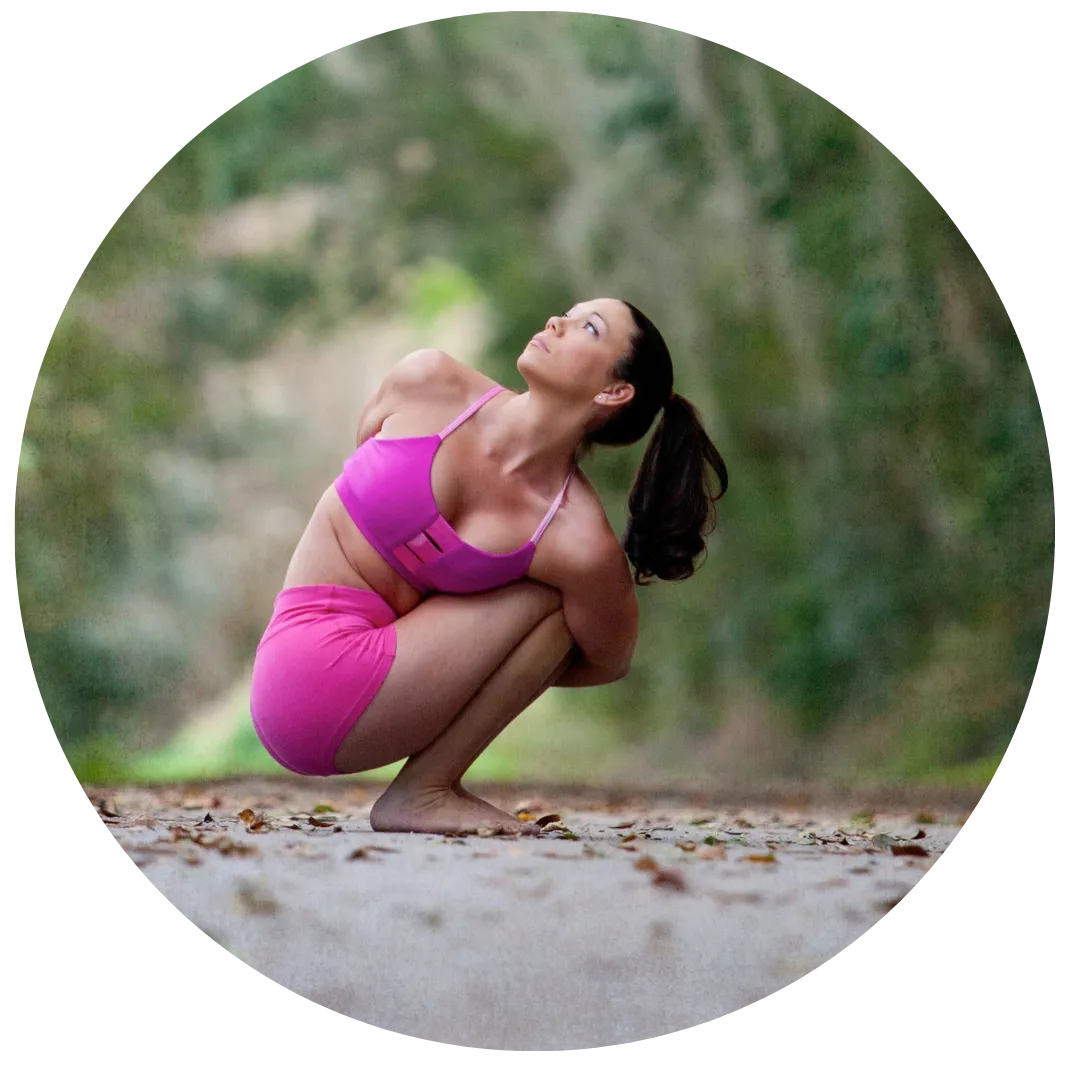
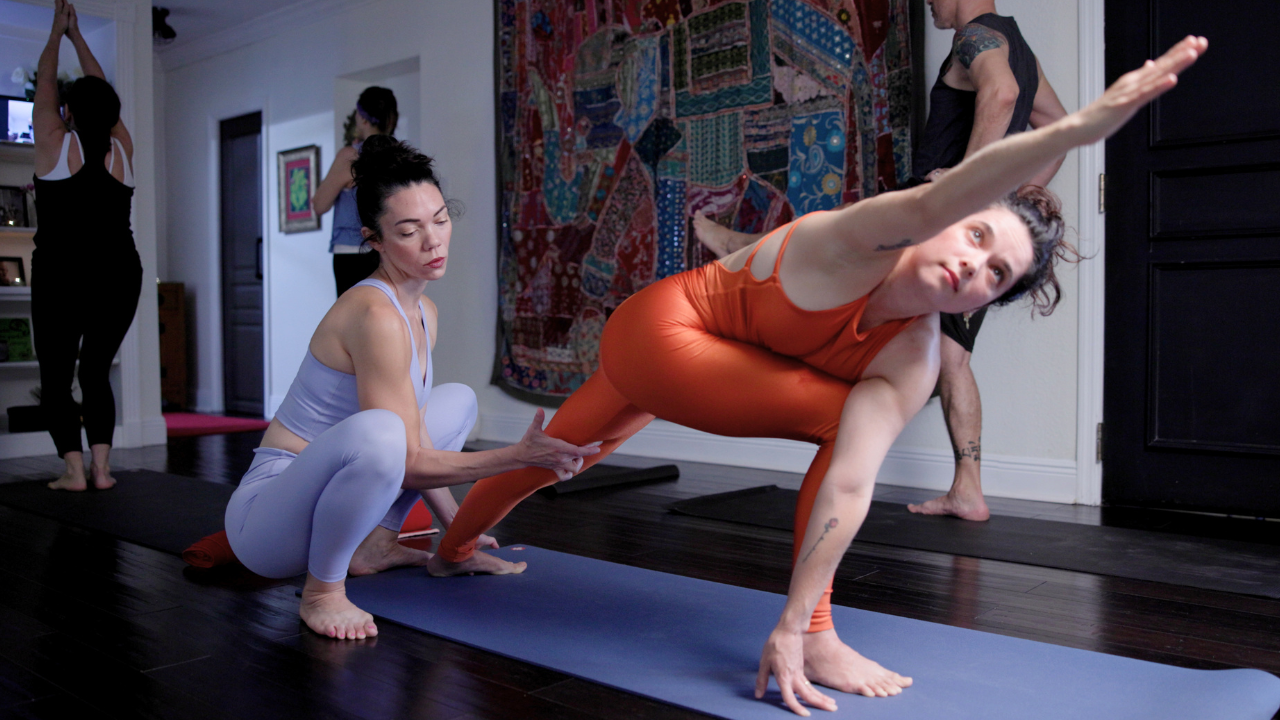
Students with different levels of experience practice together in a calm, focused environment.
Mysore-Style Ashtanga Yoga · Maitland, Florida
Yoga taught one person at a time—in a room full of people.
Mysore is a deeply personal way to learn Ashtanga Yoga. You practice the portion of the sequence you have been taught, at a pace appropriate for your body and experience, while your teacher guides you individually.
Complete beginners are welcome. No memorization is required.
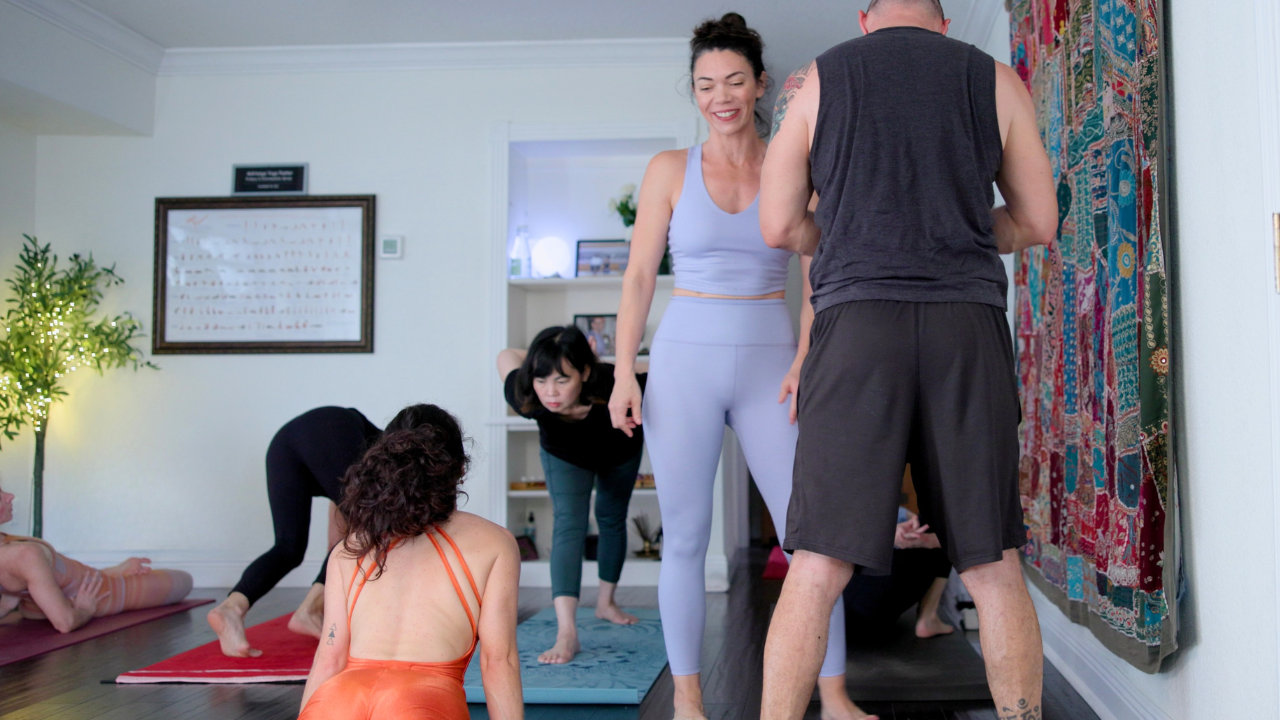
The teacher moves through the room and works directly with each student.
You are not expected to match the speed, range of motion, or sequence of anyone beside you.
New movements are introduced gradually as you become ready for them.
What is Mysore?
The room may look different. The teaching is more personal.
Mysore is not an open practice where you are left alone to figure everything out.
The name Mysore comes from Mysore, India, where the modern Ashtanga Yoga tradition developed and where generations of students have traveled to study it.
Different students may be working on different portions of the Ashtanga curriculum, moving at different speeds, and practicing for different lengths of time. What looks independent is actually a highly attentive form of teaching.
Your teacher offers reminders, verbal instruction, physical guidance when appropriate, modifications, explanations, and ongoing education. You may pause, repeat, rest, ask questions, or change a posture as needed.
Over time, the sequence becomes more familiar and your practice becomes more independent—but you are always being taught.
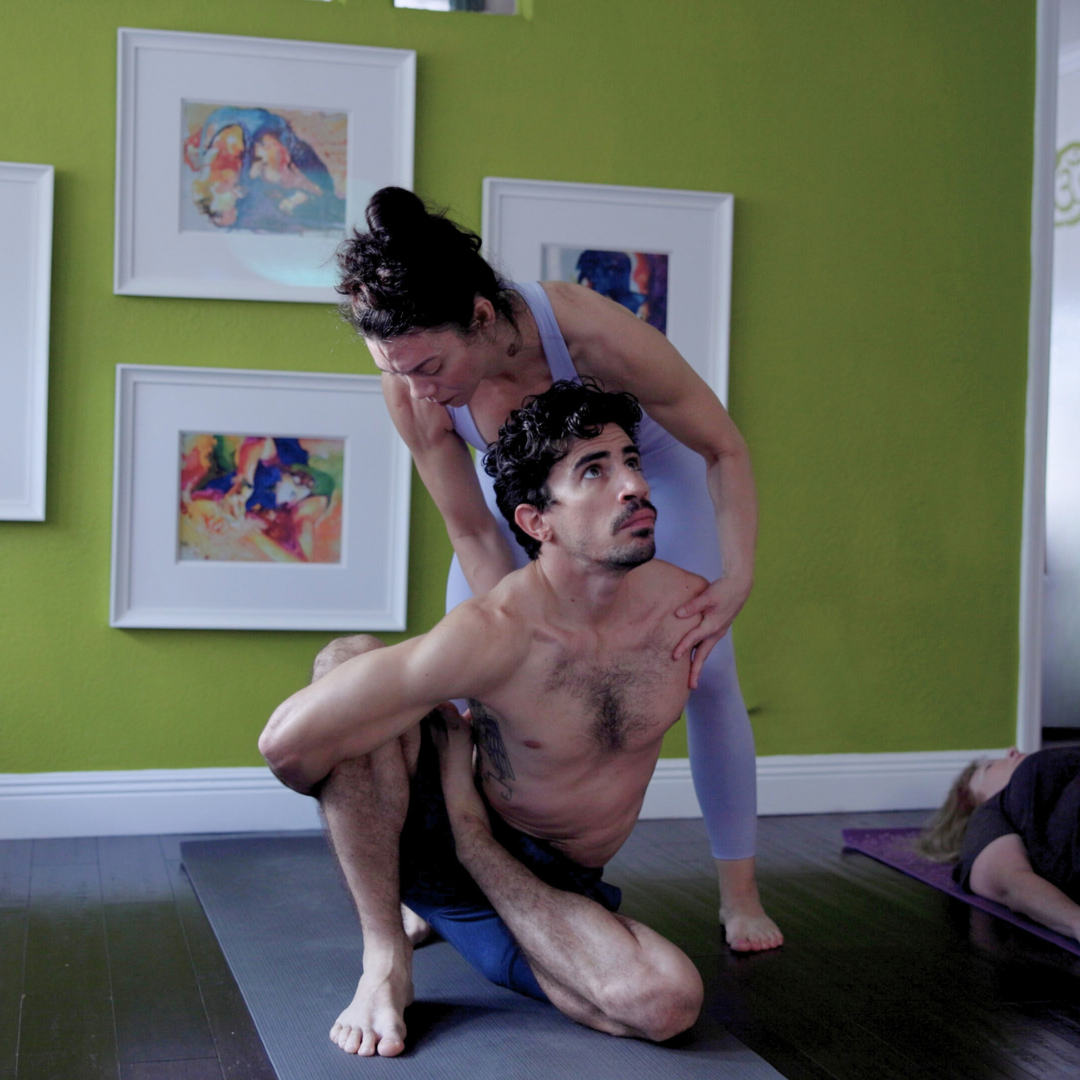
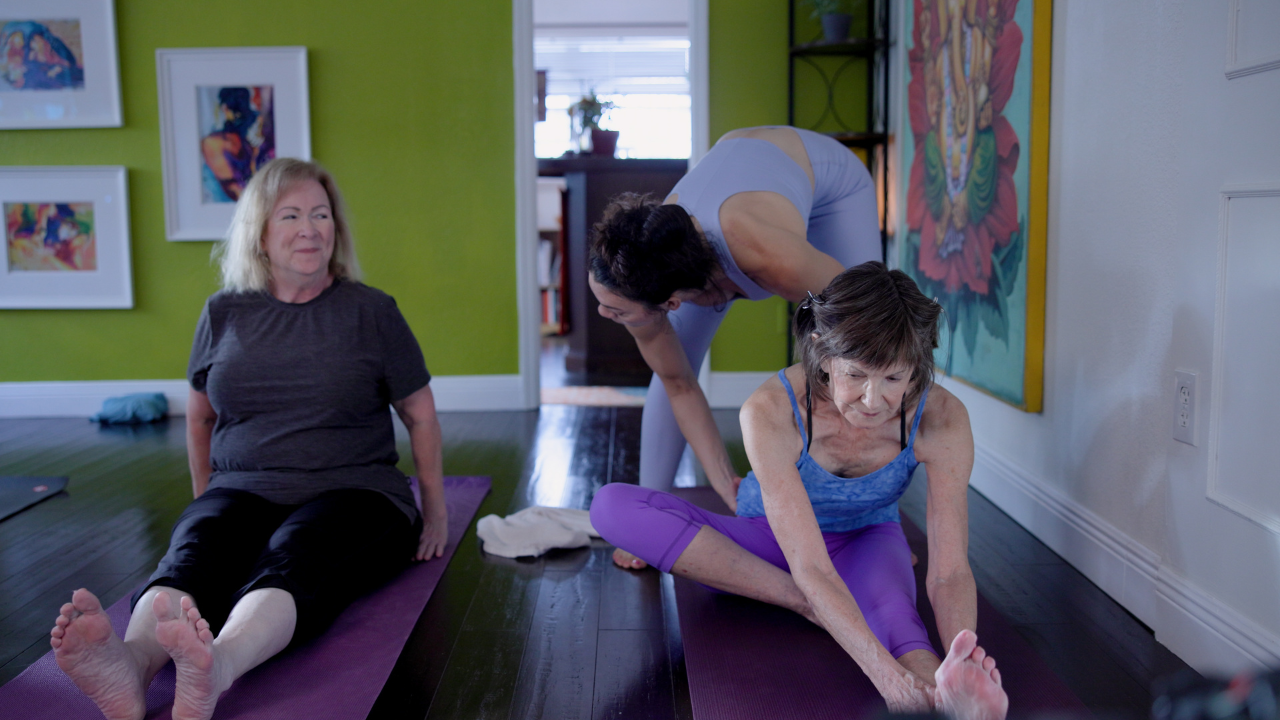
Two levels of guidance
Mysore and Beginner Mysore: what is the difference?
Both happen in the same room with the same teacher. The difference is the amount and type of support you receive.
Beginner Mysore
Beginners arrive at a designated starting time so the teacher can devote focused attention to introducing the foundations.
- No experience or memorization required
- Begin with a short, manageable practice
- Expect approximately 45–60 minutes initially
- Receive repeated instruction and modifications
Regular Mysore
Once the foundations feel familiar, you can arrive during the larger practice window and continue receiving individual guidance.
- Arrive within the Mysore practice window
- Practice the sequence you have already learned
- Ask questions and receive help as needed
- Adjust the length of practice when appropriate
Same room. Same teacher. Same personal approach. Different levels of support.
Your first practice
You begin with less—not everything at once.
Your first practice is intentionally manageable. You learn a small amount, repeat it, and add more only when you are ready.
Arrive at the beginner time
A specific start time allows your teacher to focus closely on you.
Share what matters
Tell your teacher about injuries, concerns, previous experience, and goals.
Learn the foundation
Begin with breathing, basic movements, and the opening portion of the sequence.
Practice with support
Your teacher stays nearby and helps organize each step.
Return and build gradually
Repetition creates familiarity, and more is added over time.
Why this method works
Personal instruction without losing the energy of community.
Mysore combines the attention of private instruction with the consistency and shared focus of practicing alongside other students.
Immediate feedback
Ask questions while you are moving, when your teacher can see exactly what is happening.
No pressure to keep up
You are never rushed forward because the rest of the room has moved on.
Meaningful modifications
The practice can be adapted around mobility, strength, pregnancy, injury, and other physical considerations.
Growing independence
You gradually learn to rely on your own attention while a knowledgeable teacher remains available.
Moving into regular Mysore
A Mysore class is a practice window—not one required start time.
Once your portion of the sequence feels familiar, you may arrive during the regular Mysore window. You simply need enough time to complete the practice you have learned before the session ends.
Mysore compared with a led class
Both are valuable—but the learning experience is different.
In a led class, the teacher directs the room through one sequence. In Mysore, the teacher works with each student individually inside the shared class environment.
Swipe left or right to compare both class formats.
| Class experience | Mysore-style class | Conventional led class |
|---|---|---|
| Pacing | You move at your own pace. | The teacher sets one pace for the room. |
| Sequence | You practice the portion you have been taught. | Everyone generally follows the same planned sequence. |
| Questions | You can ask questions and receive feedback in the moment. | Questions may need to wait until class ends. |
| Modifications | Adaptations become part of your personal practice. | General options may be offered to the group. |
| Progression | New material is introduced individually and gradually. | The room usually moves into each posture together. |
Connected to the source
Learn Mysore-style Ashtanga from a teacher who has lived the practice.
The quality of a Mysore program depends on the teacher’s ability to observe, understand, and educate each student over time.
Krista Shirley began studying in Mysore, India in 2005 and received Level II Authorization in 2009. Her teaching is rooted in the traditional Ashtanga method while remaining responsive to the person in front of her.
Questions about Mysore
What new students usually want to know
Do I have to memorize the Ashtanga sequence?
No. Your teacher will show you each step and remind you what comes next for as long as needed. The sequence becomes familiar through repetition.
Can I attend if I have never practiced yoga?
Yes. Beginner Mysore is designed for people new to Ashtanga or completely new to yoga.
Is Mysore a self-guided yoga class?
No. Students gradually develop independence, but the teacher actively observes, instructs, modifies, and continues educating each student.
How long will my first practice be?
Allow approximately 45 minutes to one hour. Your active practice may be shorter because the first session also includes instruction and discussion.
Can the practice be modified for injuries or pain?
The individual format allows movements, postures, and practice length to be adapted around many physical considerations. Tell your teacher about relevant concerns before beginning.
Begin exactly where you are
Your first practice is not a test. It is an introduction.
Come as you are. We will show you where to begin and guide you one step at a time.
Questions before beginning? Contact The Yoga Shala.