
Build useful strength and control through carefully organized movement.
Body Mechanics · Maitland, Florida
Build strength. Improve coordination. Learn to trust your body.
Body Mechanics is Krista Shirley’s proprietary full-body movement method. Classes combine functional strength, mobility, balance, breath, coordination, and focused sensory work in a low-impact practice that is challenging without relying on jumping, running, or fast choreography.
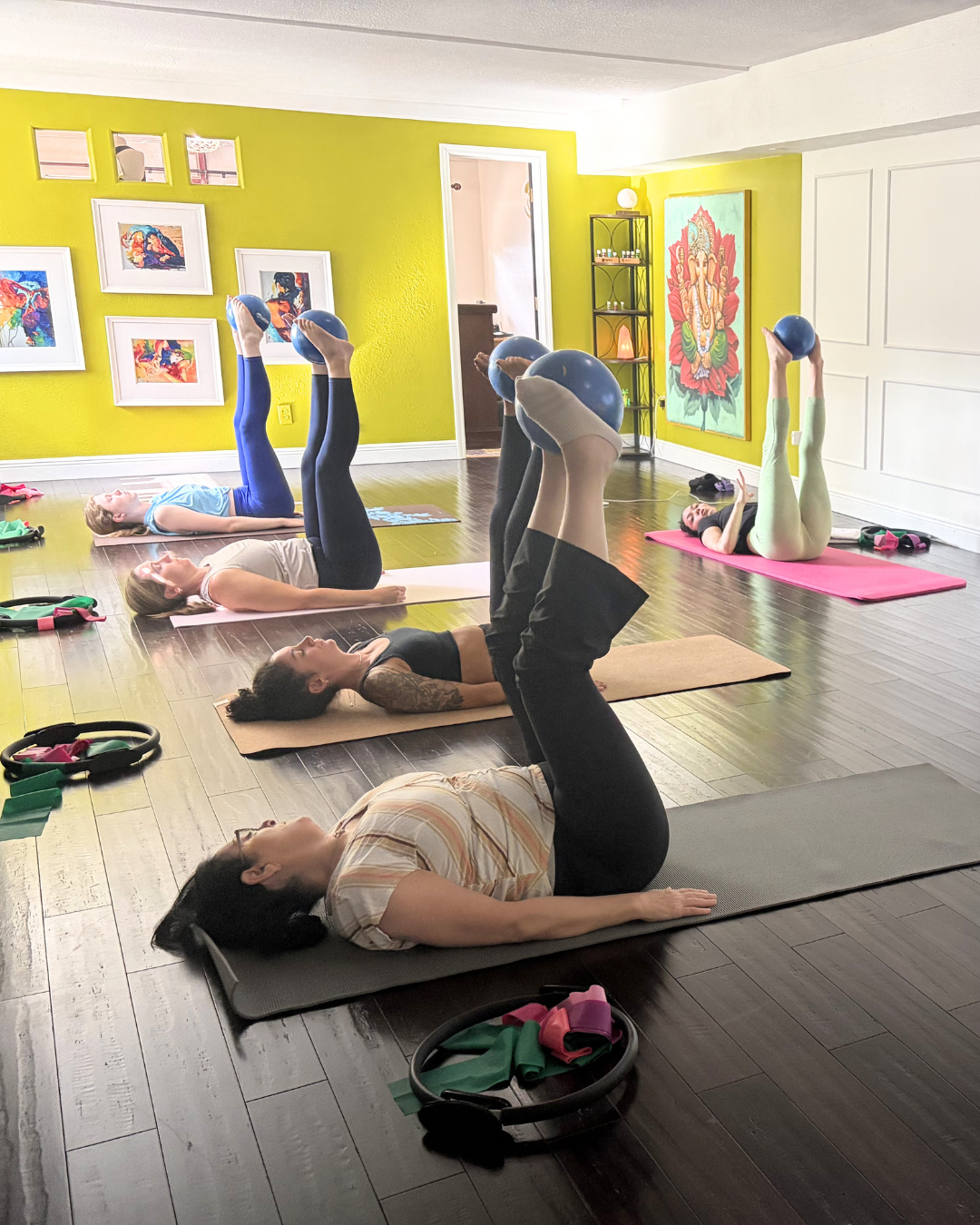
Improve range, stability, balance, and confidence without forcing shape.
Use attention, breath, contrast, and repetition to refine coordination.
Work deeply without jumping, running, or fast choreography.
What is Body Mechanics?
A workout that changes how you sense and organize movement.
What makes Body Mechanics different is not simply which exercises you do. It is how you are taught to experience them.
A Body Mechanics class may feel similar in some ways to mat Pilates. It is thoughtfully paced, low impact, and capable of building tremendous strength and control. Work may be performed lying down, side-lying, kneeling, seated, or standing, sometimes with small props or light resistance.
Each class integrates functional strength, mobility, balance, coordination, breath, and sensory awareness. Instead of rushing through repetitions, you notice how movement begins, where effort is going, how the two sides differ, what your breath is doing, and whether your body has found a more efficient strategy.
You may work your dominant and non-dominant sides differently, close your eyes to sense position more clearly, slow a movement enough to notice which muscles participate, or repeat an exercise with a new point of focus.
The goal is not perfect symmetry or a particular shape. The goal is to give your brain and body more movement options—and to become stronger, more responsive, and easier to trust.

Slow, precise, effective
Slow enough to feel. Challenging enough to build real strength.
Body Mechanics uses deliberate pacing so you can build strength and coordination without relying on speed or momentum.
What happens in class
Precise movement. Meaningful challenge. No pressure to keep up.
The class is shared, but the teaching remains responsive. Variations and adaptations allow different students to work intelligently within the same room.
Move slowly enough to notice
Slower pacing gives you time to sense position, effort, compensation, breath, and control instead of relying on momentum.
Train both sides with curiosity
Comparing sides reveals habits and improves awareness without treating difference as failure or demanding artificial symmetry.
Build strength that transfers
Develop functional strength, stability, mobility, balance, and coordination that support daily life and other practices.
Applied nervous-system learning
Proprioception, interoception, and neuroplasticity—experienced through movement.
These are not lectures added to the workout. They are capacities you practice while moving.
Proprioception
Your ability to sense where your body is in space and how its different parts are moving, even when you are not looking.
Interoception
Your ability to recognize internal states such as breath, tension, effort, pressure, fatigue, and sensation.
Neuroplasticity
Your brain’s ability to learn, adapt, and create new neural pathways through focused attention, experience, and repetition.
Changing pace, focus, position, visual input, resistance, or the relationship between breath and effort can turn a familiar movement into a new learning experience.
Body Mechanics helps you build a body that is not only stronger, but also more organized, adaptable, and responsive.Who benefits?
Everyday people who want an intelligent, well-rounded workout.
You do not need to be injured, athletic, flexible, or already coordinated.
Active and athletic
Build useful strength and coordination beyond the repetitive patterns of yoga, running, cycling, or lifting.
New to exercise
Learn without fast choreography, jumping, or pressure to keep up.
Returning after time away
Rebuild strength, mobility, balance, and confidence at an appropriate level.
After pain, injury, or surgery
Explore movement carefully while respecting medical guidance.
Body Mechanics is movement education—not diagnosis or physical therapy. Movements can be adapted, but students should follow the guidance and restrictions of their healthcare providers.
How Body Mechanics began
Built through lived experience—not theory alone.
Krista Shirley developed Body Mechanics through her own experience rebuilding movement after severe nerve damage disrupted communication between her brain and injured limb.
Traditional stretching and strengthening were not enough. She had to relearn how to sense the limb, access the muscles that remained available, recognize compensations, and create new ways to organize movement.
Although the method grew from a profound recovery process, it is not simply a rehabilitation class. Attention, sensory awareness, coordination, repetition, contrast, and focused movement are valuable for every body.
You do not have to lose function before improving how your brain and body work together.

Two ways to practice
Join the group class—or receive focused one-on-one support.
Both use the same method. The difference is the amount of individual time and specificity.
Body Mechanics Classes
A challenging, low-impact full-body workout in a supportive group environment.
- Strength, mobility, balance, coordination, and breath
- Thoughtfully paced instruction
- Adaptations for different bodies and experience levels
- Included in the four-class new-student introduction
Private Body Mechanics
Individualized movement education shaped around your history, goals, pain, injury, surgery, mobility, coordination, or changing movement needs.
- Available in person and virtually through Zoom
- 60- and 90-minute options
- More time for detailed observation and progression
- Movement education—not diagnosis or physical therapy
New student introduction
Try the class before deciding what comes next.
Use your four-class introduction for Body Mechanics, Mysore-style Ashtanga, or Sound Bath sessions.
$50Four classes for new local studentsClaim the Intro Special
Questions about Body Mechanics
What new students usually want to know
Do I need to be injured to take Body Mechanics?
No. Students include active people, complete beginners, people returning to exercise, and people who simply want to build strength, mobility, balance, and coordination.
Is Body Mechanics the same as Pilates?
No. It may feel similar to mat Pilates because it is low impact and strength-building, but Body Mechanics also emphasizes breath, sensory awareness, coordination, side-to-side comparison, and how the nervous system organizes movement.
Is the class appropriate for complete beginners?
Yes. No prior yoga, Pilates, or exercise experience is required. Movements can be adapted, and the class does not depend on fast choreography.
Can I participate with pain, injury, or a surgical history?
Many movements can be adapted, but Body Mechanics is movement education rather than medical care or physical therapy. Tell the teacher about relevant concerns and follow your healthcare providers’ guidance.
What should I bring?
Wear comfortable clothing and bring a yoga mat and water. Small props or light resistance may be used depending on the class.
Begin where you are
You do not need to fix your body before learning how to work with it.
Come build strength, mobility, coordination, and a clearer relationship with the way your body moves.


